Luthier's Tools
Purfling Marker
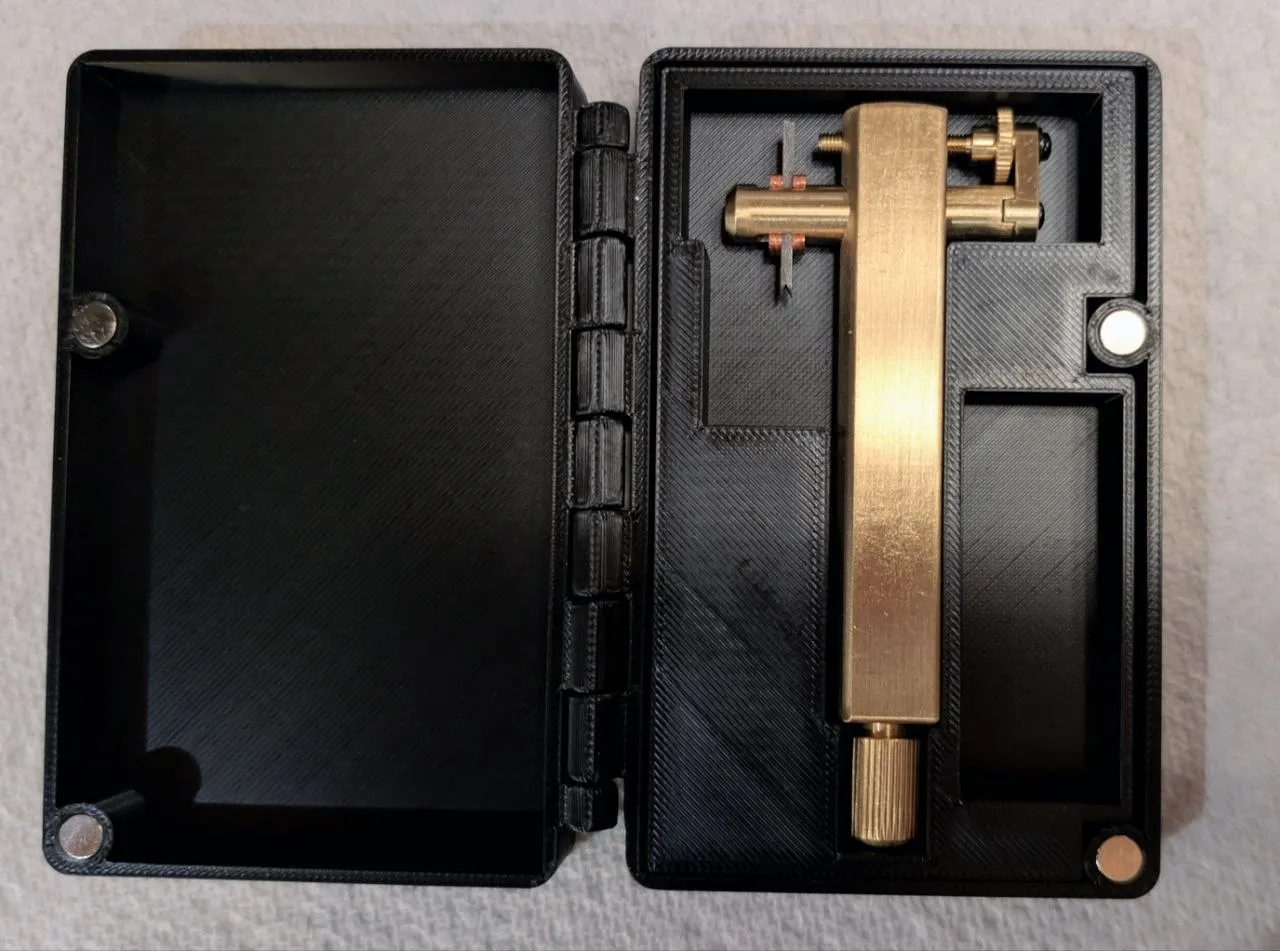
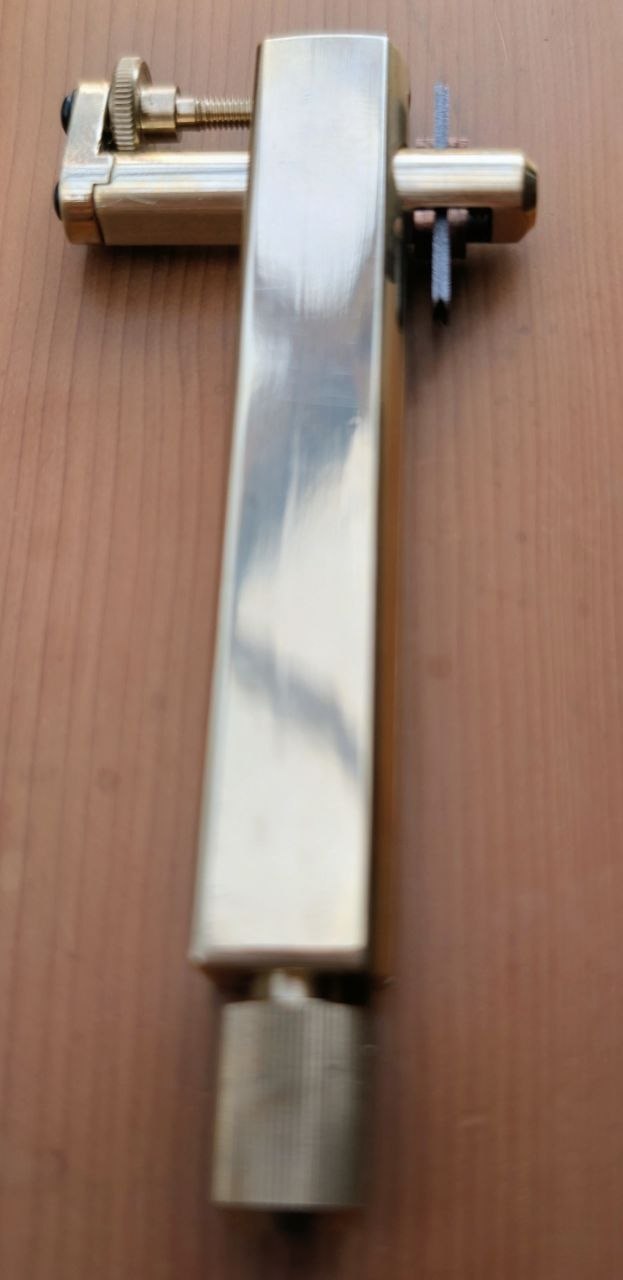
A double-blade purfling marker in solid brass, with fine thumbwheel adjustment
Run the working face along the edge and two parallel blades mark both lines of the purfling channel in a single pass. Unlike markers that sit on top of the plate with only a small lip over the edge, this one is designed to be used with its body hanging below the plate. On violins, violas and cellos it runs against the edge of the plate, whether the plate is loose or already on the body. Viols have no overhang, and their edge isn't defined until the body is assembled, so they are purfled on the body and the tool runs against the body itself.
The edge margin is set with a knurled thumbwheel that feeds the blades in or out on a fine screw, 0.5 mm per turn, so it is smooth and repeatable rather than slide-and-clamp. A knurled knob underneath locks it. The working face is slightly convex with a relief channel down the middle, so the tool bears on the edge at two points and follows irregular edges without rocking.
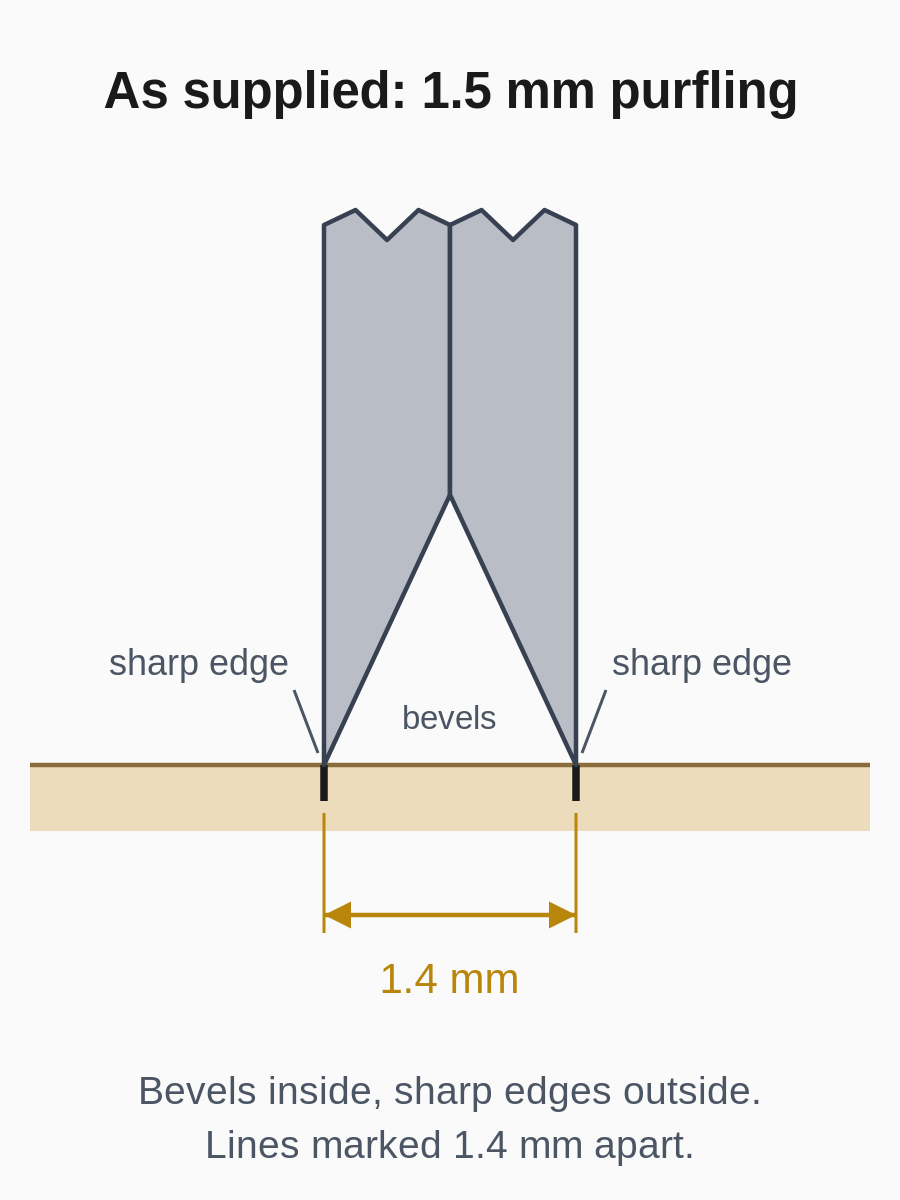
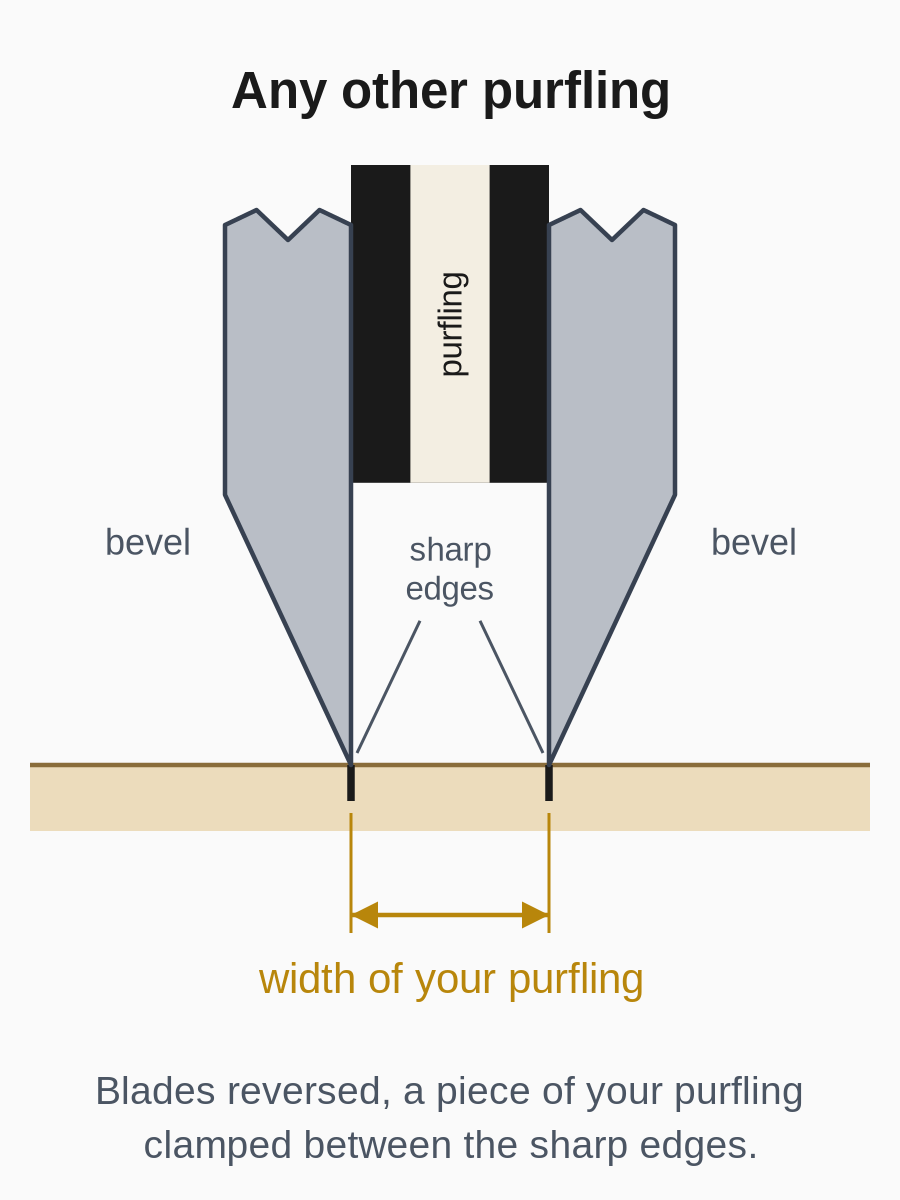
As supplied, the blades are set for 1.5 mm purfling with no adjustment needed. For other purfling, take the blades out, turn them round, and clamp a piece of your purfling between them to set the width.
Based on the original design by Brian Hart and Shem Mackey. Solid brass, hand assembled in Britain.
In the box
- Purfling marker, fitted with two blades
- 2 mm hex key for the blade clamp
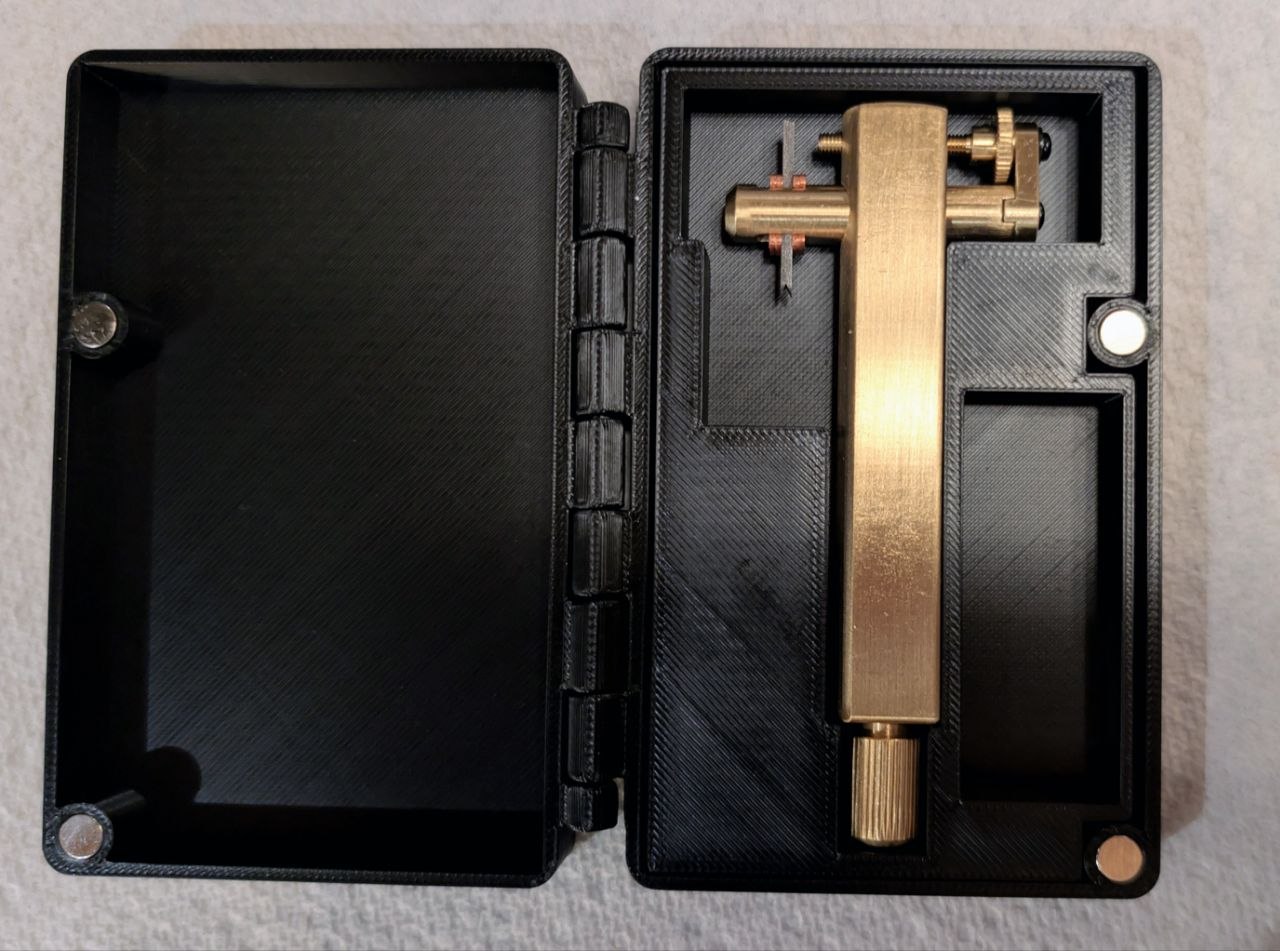
- Fitted, hinged case with magnetic catch
Before use
The blades are supplied unsharpened; sharpen them to suit your work. The edges of the channel in the working face may need a light deburr. Check that the working face won't mark your instrument before use; that is the user's responsibility. Always make a test run on scrap wood before marking the instrument itself. Undo the locking knob before turning the thumbwheel, or you may damage the tool.
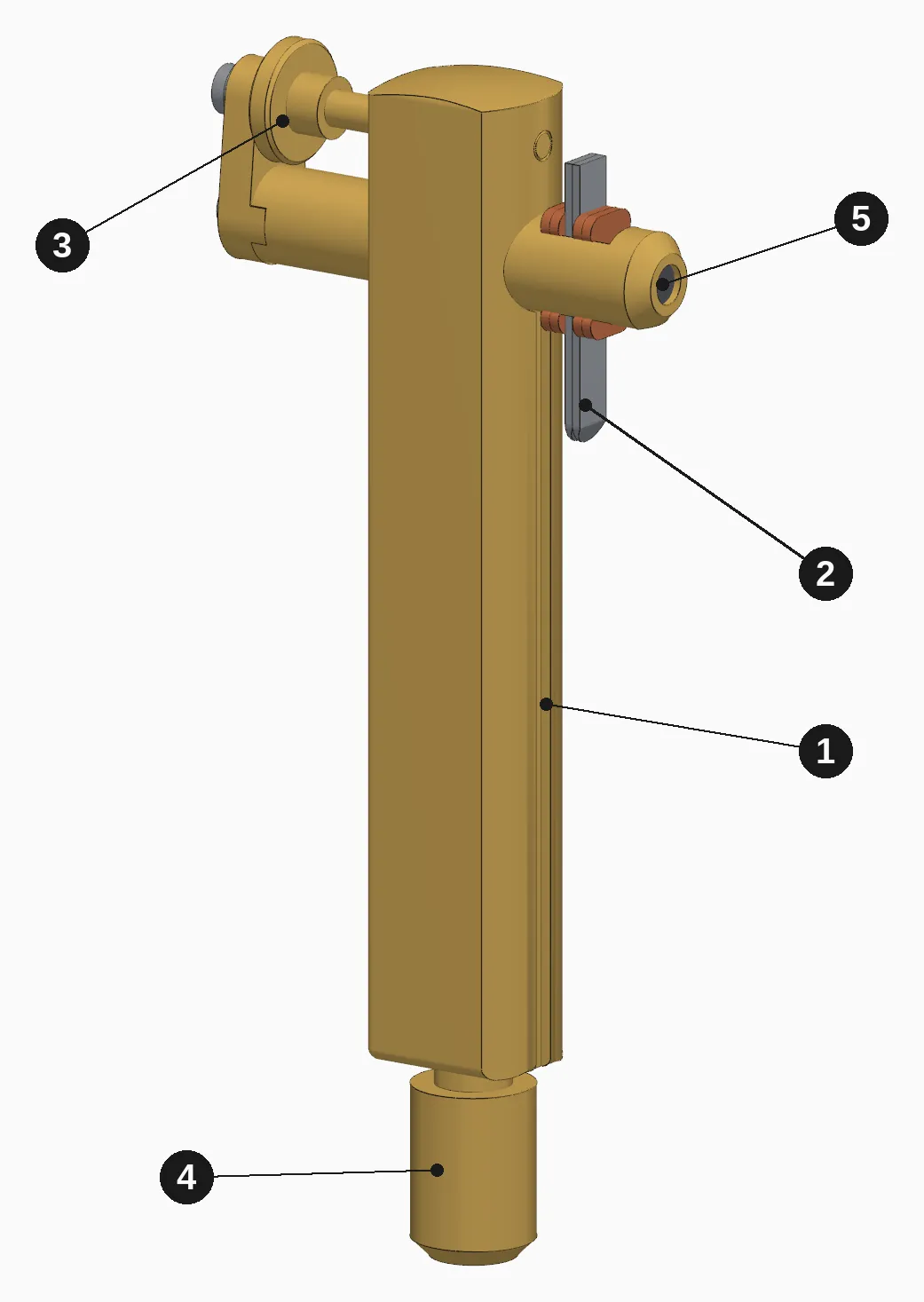
Adjustments
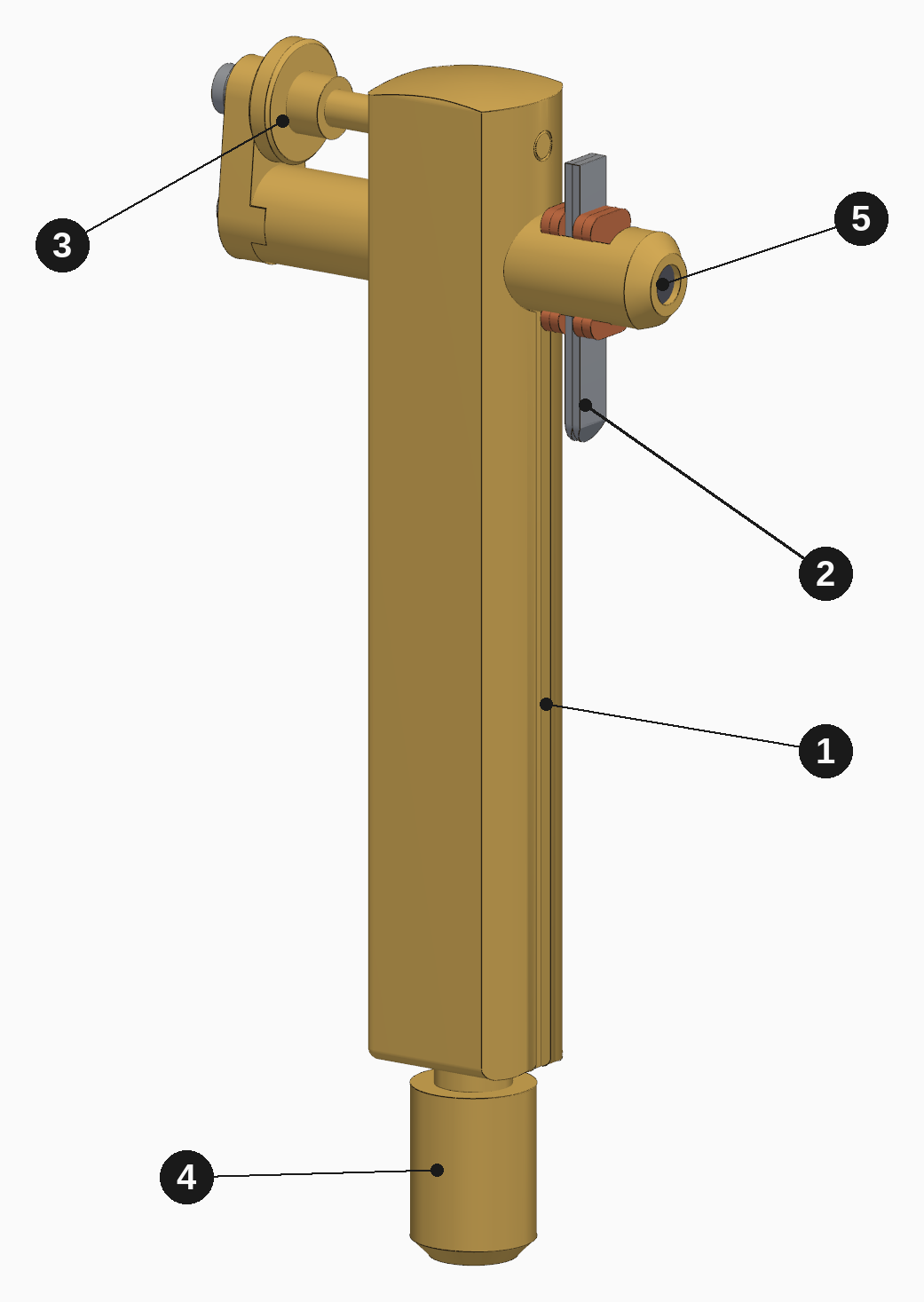
- 1
Working face
Runs against the edge of the plate (violin family) or the body itself (viols, which have no overhang), with the body of the marker hanging below. The relief channel down the middle means it bears at two points.
- 2
Blades
Mark the two lines of the purfling channel. Set for 1.5 mm purfling as supplied.
- 3
Thumbwheel
Sets the margin: turn it to move the blades closer to or further from the working face, 0.5 mm per full turn. Always undo the locking knob first.
- 4
Locking knob
Tighten to hold the margin once it is set. It must be done up for the marker to fit back in its case.
- 5
Blade clamp screw
Loosen with the 2 mm hex key to remove the blades. For other purfling, turn the blades round and clamp a piece of your purfling between them.
Important
Always undo the locking knob before turning the thumbwheel. Turning the thumbwheel while the knob is tight can damage the tool. Do the knob up again before putting the marker away, or it won't fit in its case.
Setting the blades
Looking end-on at the two blades, to scale. Each blade is flat on one side and bevelled on the other, with the sharp edge on the flat side.
As supplied: 1.5 mm purfling
Bevels facing each other, sharp edges on the outside. The lines are marked the combined thickness of the two blades apart, 1.4 mm, which is ideal for 1.5 mm purfling. No adjustment needed.
Any other purfling
Loosen the clamp screw, turn both blades round so the sharp edges face each other, and clamp a piece of your purfling between them. The lines are then marked the width of your purfling apart. It's wise to scrape the spacer piece back by about 0.1 mm first, so the purfling will fit the channel.